Showing posts with label comic. Show all posts

Saturday, January 16, 2016

Ten Great Graphic Novels Being Sold on Amazon for Under a Dollar


Two of my previous articles, Ten Great Graphic Novels Being Sold on Amazon for a Penny & its sister article were somewhat popular, so I looked to write a third entry, but I found that there are many great graphic novels that, while costing more than a penny, were easily affordable and should be considered must reads for a comics fan (in my ever so humble opinion). And so for those of you with slightly deeper pockets, I present to you, 10 great graphic novels being sold on Amazon for under a dollar.


The Milkman Murders  By Joe Casey & Steve Parkhouse. In a reverse perfect Donna Reed existence, a housewife who is trying to keep her extremely dysfunctional family happy is raped by a wandering lunatic driving an old fashioned milk truck. Parkhouse's art blends with the script brilliantly. The perceived grime and filth is everywhere. Each character is foully drawn that you can smell the grime and BO wafting off of them.


Uther The Half Dead King   By Bo Hampton & Dan Abnett. This is the story of King Arthur’s father, Uther Pendragon, a brutal military leader whose character is often used as a foil of Arthurs own golden age. The story deftly mixes Arthurian legends with English history. He is presented as a man shaped by his times. He had the ability to survive the times, but not to tame them, and that ultimately cost him his life.


Silk Tapestry and Other Chinese Folk Tales: Songs of Our Ancestors Volume 2 
By Patrick Atangan. Three beautifully illustrated short stories from Chinese mythology. In The Silk Tapestry, an old woman's last hope to live well is in the completion of a magical tapestry, which opens to paradise. In Sausage-Boy and his Magic Brush, a boy's magical paintings that come to life attracts a greedy woman. In The Creation Myth of Pan Gu a lonely spirit sculpts the Earth from a cosmic egg in hopes it brings him some company.


Age of Bronze- A Thousand Ships  By Eric Shanower. This is part one of the Trojan war, specifically all of the events that lead up to the launching of the 1,000 ships after Helen of Troy. As you can see from the bibliography, the author put an intense amount of research into creating the right look and facial constructions for the time period. All mythical elements have been removed from the tale, except as being told as stories within stories themselves, and a logical reasoning has been applied to the mythic tale.


Aetheric Mechanics By Warren Ellis & Chris Deier. A short but filling work. Ellis follows the trend of mixing up various 19th Century genres and characters together to create a wide world, but this one has an interesting twist and an ending that makes this story great. Highly recommended.  


AKA Goldfish  By Brian Michael Bendis. Bendis’s breakout comic. The story of a wronged grifter coming back to town to take revenge on all those who had wronged him, plus one other reason. The story is fast paced and compelling, deftly mixing humor and tragedy into a brutal crime noir tale.


The Birthday Riots By Nabiel Kanan. The story of a once progressive middle aged man who now has been worn down and corrupted by the realities of life. He is an advisor to a man running for mayor and tells him not to focus on the needs of lower class, as it will not get him as many votes- an exact opposite of who he used to be. This is a low key tragic tale of man stumbling through the wreckage of his now tattered morals and caught up in an actual riot, a partial result of his own actions.  


London's Dark  By James Robinson & Paul Johnson. An interesting tale set in London during the blitz. A man is murdered during an air raid and, after his body is found, the police naturally assume he was a victim of the Germans. Later on his mother goes to a psychic to contact her dead son, only to have him tell her that he was murdered. Things get out of control from there. The art is stark and realistic, perfectly capturing a sense of grime and grittiness of the time.


Silent Invasion: Secret Affairs & Red Shadows  By Michael Cherkas & Larry Hancock. The Silent Invasion is one of those rare books that was truly ahead of its time. Coming out in 1986, it was a black-and-white comic, well before black and white comics were fashionable. It dealt with a secret government conspiracy, involving aliens, well before the X-Files popularized the idea. The Silent Invasion was a victim of its own originality, and never got the recognition that it deserved. It is a paranoid cold war thriller that revolves around reporter Matt Sinkage who after having an encounter with aliens, cannot convince others of their existence. This collects them first two, of four, volumes.


         Hope you’ve found something of interest here. And as always you can check out my What I’ve Been Reading Page for any more suggestions. Enjoy and Caveat Emptor!


For more weirdness try Across the Wounded Galaxy by Rex Hurst


Saturday, August 29, 2015

You Don't Need to Wash the Whole Film Grey to be "Grim and Gritty"

 
Is there something there? I can't tell.
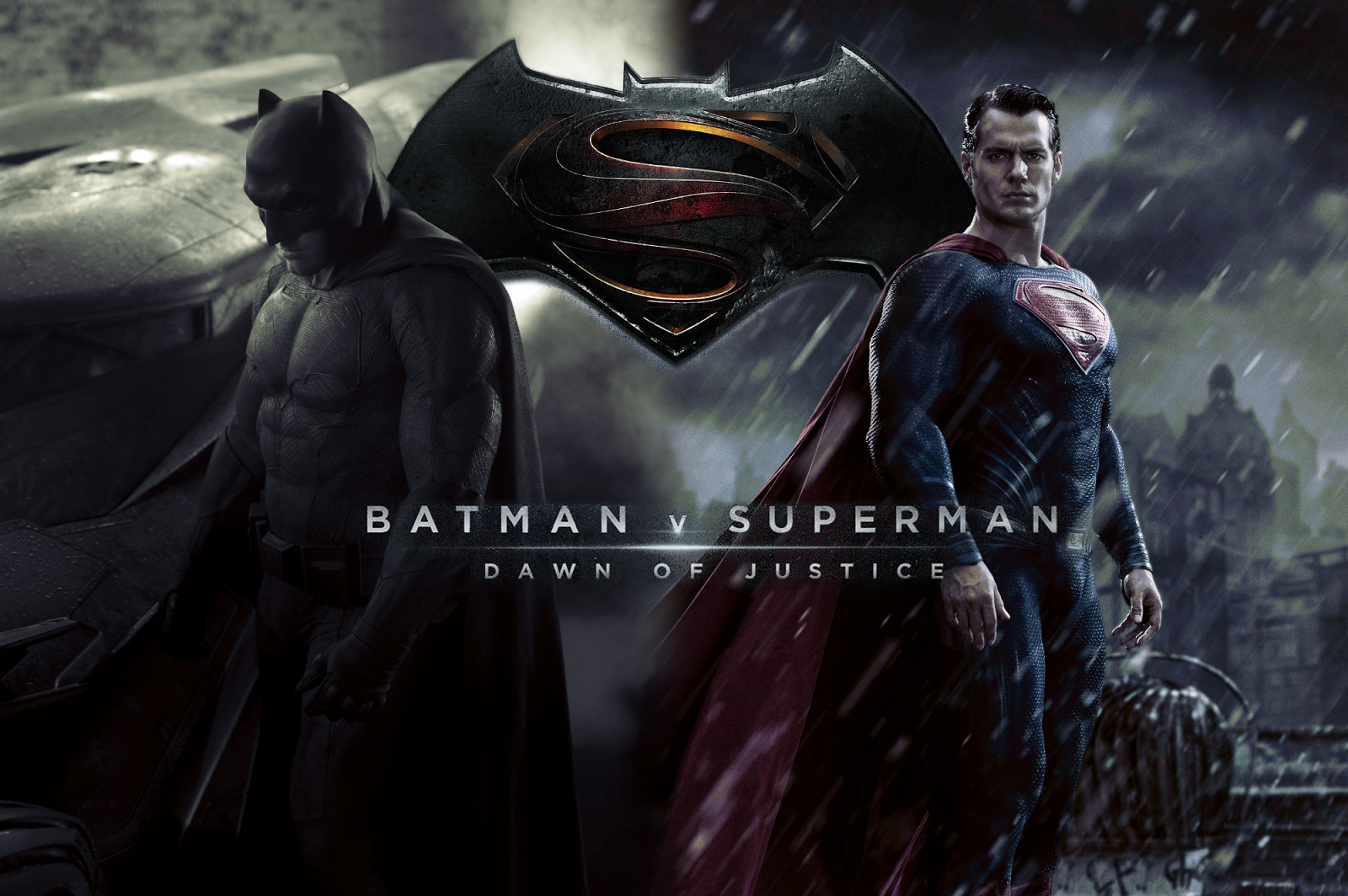
With the coming of Batman Vs. Superman I feel the need to address something that has been bothering me for some time. That is the use of “color code” for a film genre, or to be more precise the use of digital color correction to wash an entire film a specific tint. You may have noticed: Horror films are blue; Sci-fi is green; Films in the desert are yellow; And if it is supposed to be an apocalyptic film it will be grey. 
      The first to use this all the way through was O Brother Where Art Thou, who washed the film to give it that old time sepia color. Which was nice and different then. It worked for the style of film, but now the trend has got out of hand.
      The film which bothered me the most in its use of the color code was Man of Steel. The grey wash was so thorough that it nearly blotted out every other color and, even though there was a lot of action, the use of grey made everything very dull to watch. I saw it in Imax and 3-D and still I was so bored that I fell asleep. Later on, as I analyzed why I was so bored, the one thing that I hit on more than anything else was the color scheme. As much as this might make me sound like an idiot, the use of bright colors or a contrasting scheme helps to capture the viewer’s eye and hold their interest. When everything is monotone and gloomy, then a person’s attention lapses. If we look at babies, they are naturally attracted to bright shiny objects and colors. And we never really lose that interest, even as adults, we’ve just learned not to shove everything in our mouths.
       Man of Steel came out a while ago, but what really prompted me to write on this topic was a conversation I had with a drone not too long ago (How come so many of my blogs are spurred on this way?). And by drone, I mean some who laps up everything that is tossed at him and regurgitates it back without thought. It was as if I was speaking to a larynx rather than a brain. But I didn’t realize this when I first spoke to him, otherwise I wouldn’t have wasted my time.
       During our conversation it came out that he was a fan of Man of Steel. I described my problems with it and he shook his head. He stated that the film was supposed to be “grim and gritty” and that the color had to match. That everything being grey was necessary to set the tone of the film.
       “Otherwise people might not realize.” He added.
        The conversation soon became pointless and I gave up.  I will get into the whether the character of Superman needs to be “grim and gritty” on a future blog, but the idea that the entire film has to be a dull color to set the tone is ridiculous.
       To prove my point. I will contrast various scenes from that wonderful classic A Clockwork Orange against Man of Steel. No one in their right minds will ever say that the subject matter of A Clockwork Orange is anything but grim and gritty. It is a savage tale told with an unblinking eye, but damn is it colorful.


If your haven't read it.
It's real horrorshow.


Lets start with a scene of characters sitting down:
No wonder this planet committed suicide. It is the most depressing place in the Universe.
There is black here, but it is offset by many other colors and draws your eye in.


       Jungian psychologists have studied the effects of colors on people. They discovered that grey tends to make one feel of: dampness, depression, lack of confidence, lack of energy. Not a great mood for an action movie.
       How about another example? Here we have characters who are verbally opposing the scene's protagonist. Which has more energy?  
 I'm about to go into hibernation.

The color primarily used here is white. Even the graffiti on the wall is white.
Which stands out? Which is more vivid?
Now let’s take a look at the protagonists.
Superman
Alex Delarge
     Note that the Clockwork Orange is awash in brightness and light, and yet still is able to denote a sinister tone. That’s because before digital color correcting they used a device called acting to set the mood.
     But this is all people sitting around. Let’s look at some action! 
Flying around in dark clothes against a dark background.

Granted the giant penis helps to grab your attention as much as anything else.
     Had enough? Let’s just try one final image. This is reaction shot of the protagonist in peril. Which grabs your interest more?
Man of Steel...
or A Clockwork Orange?

      Unfortunately it does not seem like overuse of digital color correction is going away anytime soon. Like the shaky cam technique, a lot of film directors and producers seem convinced that it adds to a film’s quality- or at least is what people want.

       Why? Because at the end of the day a lot of people are going to want to see Batman and Superman fight, no matter what the film looks like.
 For more fun try books by Rex Hurst


Friday, April 17, 2015

The Madison-Felix Awards: Turning Crap Into Fabulous Prizes


The Madison-Felix Awards was an awards show in Buffalo New York, which ran from 1995-2005. It was put together by my friend Big Brian and I. In reality it was a parody of an awards show mixed with an open bar drinking contest. Still it was fun and irreverent and some of the best parties I've ever had. But like all good times, they eventually drifted off to the land of nostalgia. The next four blogs are dedicated to their memory.
      There comes a time in every man’s life when he looks around his hovel and thinks, “I’ve got way too much shit.” A body collects these things as he saunters through life, like ticks in the wild. Until a day of reckoning, or a day of moving, where he starts poking through the back rooms of his life and all sorts of odd bits and pieces fall out. Thimbles, wires, inkpads, left handed safety scissors, shot glasses from Pittsburgh: all safely tucked away “just in case.”
      Just in case of what? I don’t know. In case someone’s strangling me with a piece of yarn and my right arm is paralyzed. The only thing I can use to save myself with is my trusty pair of left handed safety scissors.
      The world is filled with such things. Your house is jam packed with oddities. Go through it right now. I dare you. Sweep out the back shelf of your broom cupboard and the dusty corners of your attic. See what bits and pieces you’ve stored away because “it might come in handy one day.”
A cornacopia of fabulous prizes!
     Jars of batteries, spare cables for the VCR, old demo tapes of some local band that never went anywhere (“Druken Puppet Sings”), album covers with no vinyl inside, mismatched socks, “Dukakis in 88” pins, Volume 16 of the Junior Encyclopedia for 1948, old photographs of a guy who might be a great uncle, or crappy Christmas decorations that you made in 5th grade that your parents “just love.”
     If my words don’t ring true in your ears, then there is something the matter with you and you need to reexamine your life. Go back to Iraq Mr. Al-Queda. If this does strike a note of recognition, then let me tell you how I turned crap into fabulous prizes.
     The Madison-Felix Awards, that great tribute to cheapness, vulgar audiences, and alcoholic shenanigans, was entering the terrible twos. It’s infancy was marred by various problems that Brian and I corrected. One task was left, and I decided to fix it solo. At the end of the first year door prizes were handed out to the lucky audience, all twenty of them. This last part had been left in the clumsy hands of Ensign Raiff and Nurse Pam. While their enthusiasm certainly wasn’t lacking, their sense of humor was. They bought cute things that were supposed to be funny, but actually weren’t. People chuckled and said it was funny, but it was more out of a sense that they though it should be funny, without actually being funny.
      They gave away a lot of pink plastic jewelry, gotten from a convenient CVS, spice girl dolls, rewritable plastic pads with Urkel’s picture on the cover (though we got some use out of that), and so on.  These items just didn’t fit into the style in which we were fashioning the show. That of cheapness and with a base of crass. We were the Oscar’s evil twin, with all it’s glitz, glamour, and pomposity stripped away. So the following year I took over the door prizes, and like the Russians who built the disastrous Volga-Don Canal in 1931, I declared that there would be “not one kopeck spent.” It would all be gathered from the generous accumulation of crap which had been stuffed into the nether regions of my closet, and beyond.
      Being of a lethargic nature, I didn’t get to work straight away, but let the idea ferment in my mind for awhile. What spurred off the initial gathering was a pile of junk left at my work. I was employed at Noco Gas Station on the corner of Sweet Home and Sheridan. I worked the midnight shift, as it appealed to my nocturnal instincts and paid an additional 50 cents an hour. Not much happened usually, and I had plenty of time to read and sleep, but we were closely situated to the University of Buffalo Amherst Campus, so there were plenty of head-up-their-ass college punks around (more on this in a later post). The hippie revival movement of the early 90s was starting to catch on in the area and brought around all the usual dregs that such movements dig up. I’m sure you know what I mean: Indecent scruffy types who slouch about with their hands in their pockets, just looking at people.
Rockin!
      One evening a VW van, a vintage classic, pulled up to the store. Two tied-died “people,” stinking of petuli and BO entered and started pooling change to buy a bottle of water. A third remained at the van emptying copious amount of garbage into the trash cans. After purchasing their water and finagling two cups out of me, presumably so they wouldn’t swap their various types of hepatitis with each other, they departed. Leaving the store I found that they had filled 3 of the 4 cans and left a pile of old vinyl albums on top of one. Closer inspection showed that these were just the album covers with no sign of anything else in them. The thought then hit me. These would be great gifts to use at the Madisons. I mean who wouldn’t want the album cover of Peter, Paul and Mary’s “A Song Will Rise”, or The Romanian National All Male Chorus Sings, or Neil Hefti’s “Batman” Scores? The covers, while most people would see them as garbage, covered all three of the criteria I had for the Madison door prizes: They were cheap, they were crap, and they were funny in an odd sense. 
      I was inspired. I rushed home, grabbed a cardboard box, and started to dig, dig, dig. And the wonders I found. Our house, it seems, had become a receptacle for unwanted material from both sides of the family. Older members died and there was always something left behind when the loot was divvied up. They would turn to us and say, “Rex, you like reading and stuff, so here’s a crate of books from your Great Aunt Betty.” This was all on top of my Mother’s and my natural pack rat mentality. We find an item, file it away, thinking “Well it might come in handy,” and then promptly forget about its existence.
You had to be there.
     Handfuls upon handfuls of buttons were dumped in the box, a phone book from 1985, game tokens from a destroyed copy of The Blizzard of 77 board game, a few ratted up copies of The Watchtower, old comic books ("Green Lantern vs The Mind Melter!" A non-classic showdown), and so on.
     Then under my generous loft bed I found the grand prize. An item of singular beauty and attention. By itself it seemed useless, yet I found myself incapable of getting rid of it. No matter how many times I found myself handing it over at the Madisons, I found it back in the box at the end of the night. We had a true love/hate relationship. I didn’t want it, yet could not let the joke go.
      The item was an old scuffed up black Oxford shoe for the right foot, left over from High School. For those who attended private school (3 of the 4 major posters) you remember we were required to wear proper shoes whilst attending the institute, along with a shirt, dress pants, tie, clean shaven face, and short hair. For sneakers, along with long hair, leads to degeneracy and general lapses into moral turpitude. Though, as a side note, one of my class mates, Ralph Maggio, managed to go for 4 years never wearing a pair of shoes. He always snuck the sneakers through.
     Back on topic: Yes, a shoe. A glorious right shoe. Its partner had been torn to pieces by my dog Thor many years prior. For nine years I attempted to give it away and, without fail, it was left behind or tossed back into the box by an ungrateful winner. But each year it gathered bigger and bigger laughs; became one of our standard running jokes, from the people who remembered it from the year before.
      To make a short story even longer, I previewed my low budget door prizes at the end of the 2nd Madison-Felix Awards and was met with uproarious laughter and applause. Filtering out the high alcoholic consumption at such events, I still feel that people appreciated the humor value of such junk over the “cute” prizes handed out the first year. The door prizes remained in this form for the remainder of its decade long run.
       Now as I sit in my apartment looking at the increasing accumulation of “stuff” during my years in the South, I feel like starting the Madison’s again, if only to clear the clutter from my closet. I’m sure my right shoe would agree.

Friday, March 20, 2015

Why No Love for Predator 2? It’s the Better Film!


The Predator franchise is perhaps the best known and warmly embraced series about interstellar aliens on safari. It is so successful that the original meaning of the word predator now comes second in many people’s minds, after the image of the alien hunter.
I was sitting around with some friends recently- throwing back a few beers, smoking a few cigars, and urinating in a few alleys- when the conversation eventually wandered onto the topic of films. And as usual a hubbub of whiny complaints emerged about the number of sequels being vomited up by the Hollywood machine.
I don’t care. Apparently someone’s watching these films if they keep making them. The demand must be there. It’s not something that I’m demanding, but I am apparently in the minority- nothing new there. But that isn’t good enough for my friend Mitchel. He is one of those guys who constantly complains about The Walking Dead but never misses an episode, like he’s going out of his way to antagonize himself.
“They can do sequels, but why are they all so bad?”
“Perhaps because so many people- like you- watch them no matter what they’re like.”
“I don’t pay to see them.” He retorts.
Which gives him even less reason to complain.
I attempted to divert the conversation away from “those guys in Hollywood who should make good film and not bad ones” by stating that sometimes the sequels are better than the original, which starts us off listing a few. We go through the standard list- The Godfather Part II, Aliens, Evil Dead II, The Road Warrior, The Good The Bad and The Ugly- at which point I offer up Predator 2.
Never get tired of this!
The table goes dead, like I had just slapped a nun. Everyone there disagrees with me- violently so. The opposition is so fierce that I start to think we are talking about two different movies. But no, they knew exactly which film it was. The evening ended with a lot of back and forth, all of us being impolitely asked to leave, and me loudly wishing that all of their families would die of AIDS.
         So, unable to convince the others, for this entry I will present my reasons for why Predator 2 is the better film. And God help you if you disagree!
 
             1. It Has Better Actors and Acting:
           Not to disparage Ah-nold or his thespian skills, but everyone must admit staring in Predator wasn’t exactly a breakthrough performance. “You are one ugly motherfucker.” Not best catch phrase. We have all heard him grunt through similar roles in a dozen movies. His characters in Raw Deal, Commando, End of Days, Collateral Damage, and Predator might’ve easily been the same character.
       And it holds true for the rest of the original Predator cast as well. While we all enjoy the irony factor of having two future US governors in the film, Jessie “I’m a Sexual Tyrannosaurus” Ventura is no actor of merit. Carl Weathers was serviceable. He said his lines in a coherent manner, lost his arm, and died. He’s really just there to be sliced up. For a serious role with Weathers, I’ll watch him in Rocky. For comedy, I’ll watch him get a stew going on. And while Bill Duke has the dead eyed sociopath character down and knows how to stab a scorpion, his role is not explosive. Plus the rest of the cast- the Indian, the Hispanic Chick and the Skinny White Guy who tells sexual jokes too childish for a 4th grader. No one was bad, they were just okay. The real standout was the alien’s makeup and it did not disappoint.
Plus it touted Morton Downey Jr. RIP
      On to Predator 2 and we have Danny Glover- always good as the everyman cop doing his best against the odds roles. Bill Paxton doing his smarmiest best as the wanna-be hot dog cop. “Blah blah blah is my specialty.” Ruben Blades and Maria Conchita Alonso as a pair of detective, not exactly your muscle bound types. Plus to top it off a pre-motorcycle accident Gary Busey, before his brains were scrambled. All together there is a lot more personality in the cast of Predator 2 and it shows.

2. It Has a Better Plot
Granted Predator 2 builds on Predator, but there is still much more swirling around in this cyberpunk future. It had gang wars, Hispanic drug cartels, Voodoo rituals, mysterious government agencies, and a city on the edge where everyone runs around packed- leading to my favorite scene of vigilantes on the subway, a fun parody of Bernard Goetz.
Predator 1 didn't have enough
old ladies with brooms!
Predator after the 40 minute mark slows down a lot. You know everyone except for Arnold and the chick will die and you’re just sitting around waiting to see what the alien looks like. After Carl Weather bites it, you might as well fast forward to the end. Predator 2 doesn’t slow down. It is paced perfectly to keep your interest, with little comedic flares along the way.

3. It Has a Much Better Resolution:
The end of Predator 2 gives us every understanding we have of Predator culture, as opposed to Predator where the creature commits suicide, trying to take everyone with him. Not exactly the spirit of an honorable hunter species we associate with them. It’s from Predator 2 where we get the true sense of them.

Some damn good comics!
The last three minutes of Predator 2 has been expanded on and influenced every other further media development of the franchise (though ‘m still waiting for a video game where you play the Predator in a free roam city, sort of like Grand Theft Auto). Plus the on special shot- added as a joke- gave us a series of great graphic novels and 2 bad movies.
Stay tuned for my next blog where I will explain why Fletch Lives is better than Fletch.
What? You don’t agree?


Wednesday, January 28, 2015

A Tale of Two Akiras

I first encountered Akira in the early 90s when it was being published in English by Epic Comics. For those of you who don't remember, Epic was an imprint of Marvel Comics, whose purpose was to reprint foreign material and new graphic material from existing literary works. It was an attempt to present comics to a more mature audience in response to the direct market trend, which had begun in the 80's. Most of the comics were printed without the Comics Code Authority seal, making it even more attractive to a young man looking for something new.
 
  I was blown away by the comic, The continuing story, the scope of the artwork, the characters, the willingness of the authors to kill off characters, all of it was what I was looking for in a story. At that time I had never read a manga, didn't even know the word. I had seen some Japanese animation (sanitized for American viewers), but never had I witnessed such a raw Japanese story unfiltered. As I flipped through my first issue, I realized just how much I had been missing, and I was pissed off. Of course even in this format I wasn't getting the original feel, for when first published it was completely in black and white, but the American edition was digitally colored (the first one to be regularly colored in this manner), but this was done with blessing of  Katsuhrio Otomo- the creator of the series.


      Then one day I was wandering my lonely Blockbuster video store (God that was long ago) and I ran across, to my eternal joy and beyond all of my hopes, Akira the movie. I snatched it up without hesitation. It was my pick of the night. Rewatching Die Hard again could wait another week.

       Now, as anyone who has seen the film will tell you, this wasn't just any anime film. Akira is the anime film. The film is made up of 2,212 different shots and 160,000 single pictures, which is enough to make at least 3 normal animated films. Additionally there were 327 different colors used in the animation, 50 of which were created just for the film.


But Which is Better?
I often feel that it is folly to compare a book to a film (Perhaps this is easier done with moving comics to animated films- I won't debate that). They are, after all, two different mediums and moving from one to another will necessitate
some differences. One thing may not look as good in the real world as it reads on the page. One example I can give here is that I always thought people in real life looked ridiculous when dressed in superhero costumes, but like them on the printed page.
Both the comic and the film are great. My picking one does not mean that I hate the other, but if I had to make a choice between them, I believe that the film is the better of the two. A shock, perhaps, to those who bleat the maxim,  "The book is always better."
My reasons are thus:

1. The Depiction of Neo Tokyo is Better:      The background movement and innumerable shots of minor characters really make the city come alive. It looked and sounded like a populated city. I could almost smell the grime on the walls, something that I felt the comic lacked. Often in the comic, they would discuss riots and anti-government groups, but they were rarely ever shown. The film corrected this.
 The comic often felt empty, as if the entire city was populated only by the main characters and a series of identical soldiers.
   Now granted in the comic there are two versions of Neo Tokyo - one before Akira awakens and another after it is devastated- while the film only has one. But in the depiction of a whole city, the film won out.


   2. The Character Development was Better:
     Each of the characters is essentially the same in both comic and film (with the exception of Miyako). But the need to compress the action in the film, gave us a greater understanding of the characters in a much more fluid way. This characterization does come across in the comics, but it is often spaced between many panels of running, shooting, and characters going, "Huh?" The film cut the action down to the essential Akira scenes and it made for a much tighter package.

 Choosing the film over the book is extremely rare I know. I've often felt that a wider tapestry makes for a greater picture, but somehow Akira the film makes it work.

   Do you agree? Disagree? Leave your comments below.

Wednesday, January 7, 2015

Marker 23


            In the late summer of 1718 the new road between Antwerp and Ghent was completed. Within a year a number of strange fatalities occurred. Over one hundred people died as a result of falling off of their horses or wagons and falling under the wheels. People on foot were unaffected. All of these occurred within the area of road marker 23.

          Troops were ordered to guard that particular part of the road, but no evidence of unlawful activity could be found. In fact, several troops died in full view of their comrades. The men simply fell off their horses and hit the ground with tremendous force. Autopsies revealed that the men died of fractured skulls, broken necks and the like.

          While local authorities were confused, John Weives, a water dowser, approached them. He maintained that the mysterious murdering force was a powerful magnetic current generated by an underground stream. As to why this affected only people riding on raised areas, such as a horse or wagon, he had no clear reason. He instead listed off, what the officer in charge wrote was “a barrage of nonsensical babble that only a savant or a lunatic could follow or find of interest.” Nevertheless they allowed Weives to apply his “solution”, which was to bury a copper box full of star shaped pieces of copper at the base of the stone marker. Since that point, there have been no strange fatalities in the area. 

          Although Weives made his living as a water dowser, and presumable knew something about underground streams, the local farmers believed that a devil was responsible for the deaths. They claim that they had it exorcized from the area, whereupon it entered the body of a black dog that barked backwards. The devil was finally purged from the land, when the dog was burnt to death on a traveling shrine containing the purported severed arm of St. Alena: a popular saint murdered by her parents for her faith in the later 7th century and invoked by the Belgium peasants for protection against toothaches.